

Small conference room hire: when you don't need a ballroom

Not every conference needs a grand venue or a sprawling conference suite. In fact, many events work far better in a smaller, more focused space. Whether your conference is a board style meeting, a training session, a client presentation, or a team workshop, a small conference room hire can offer flexibility, professionalism and better value without paying for square footage you will never use.

What counts as a small conference room?
Small conference room hire can cover a surprisingly wide range of events. It is more about choosing a comfortable room that suits the size, purpose and tone of your meeting.
Typical room sizes might include:
- 4 – 6 guests – ideal for interviews, private discussions, appraisals or board-level conferences where privacy and focus matter most.
- 10- 20 guests – well suited to team meetings, training sessions, presentations or workshops where collaboration is key.
- 30 – 50 guests – a strong option for seminars, larger training days, company briefings or networking sessions that still benefit from a more intimate setting.
It is also worth remembering that headcount only tells part of the story. Ten people around a boardroom table need a very different setup to ten people in a hands-on workshop with laptops, materials and breakout activity.
Why smaller rooms often work better
There can be a temptation to book a larger room “just in case”, but bigger does not always mean better.
A well-chosen smaller space often creates a stronger atmosphere. Conversations flow more naturally, people feel more involved, and the room feels purposeful rather than oversized. Whether it is a meeting for four or a conference for fifty, the right-sized room can make a real difference to comfort, productivity and the overall experience. Smaller spaces also tend to encourage participation. In a more compact setting, attendees are often more likely to contribute, ask questions and stay engaged throughout the day.
Benefits of hiring a smaller conference room include:
- Better value – you are paying for the space you need, rather than rows of empty chairs.
- Stronger engagement – smaller groups often lead to better discussion and more interaction.
- Easier collaboration – ideal for workshops, planning sessions and problem-solving meetings.
- Simpler logistics – quicker setup, easier room changes and less time managing movement.
- More professional feel – a well-filled room usually feels better than a half-empty large one.
No one wants to deliver a presentation to twelve people scattered across a ballroom.
Smaller rooms can also help presenters feel more confident. Speaking to a well-seated room of twenty often feels far more effective than trying to energise a cavernous space built for two hundred.

Start with the style and purpose of your conference
Before comparing venues, start by asking what your conference is designed to achieve. The style and purpose of the day should help guide the space you choose.
Is it a training-focused conference with note-taking and presentations? A collaborative workshop with breakout activity? A company briefing with speakers on stage? A client-facing event where first impressions matter? The answer should shape the room, layout and facilities you need.
For example:
- A training conference may need classroom layout, writing surfaces and strong AV.
- A workshop-style conference may need flexible furniture and space for group activity.
- A company update or briefing may need theatre seating, staging and clear sightlines.
- A client-facing conference may benefit from polished surroundings and an easy central location.
When the purpose is clear, choosing the right venue becomes much easier.
Check what is included before you book
A competitive room hire rate can look excellent at first glance, until the extra costs start adding up.
Always confirm what is included in the price, such as:
- Wi-Fi access – reliable enough for all attendees and multiple devices.
- Screens or projectors – so presentations are easy to deliver without extra hire costs.
- Video conferencing facilities – essential for hybrid meetings or remote attendees.
- Whiteboards or flipcharts – useful for training sessions and brainstorming.
- Tea, coffee or refreshments – because meetings improve dramatically after caffeine.
- Staffing or reception support – helpful for greeting guests or solving issues quickly.
Clear pricing from the start makes it easier to compare options properly and avoid unwelcome surprises later.
It is also sensible to ask about hidden extras such as equipment, overtime charges, printing costs or additional catering requests. A slightly higher day rate can sometimes offer far better value once everything is included.

Technology still matters in small spaces
Just because the room is smaller does not mean the technology matters less. Many meetings now rely on hybrid attendance, presentations or collaborative tools, so it is worth checking everything works smoothly in advance.
Consider:
- Reliable high-speed Wi-Fi – especially if several people are joining calls or sharing files.
- Screens with clear visibility – everyone should be able to see without craning their neck.
- Easy laptop connectivity – simple plug-and-play beats ten minutes of cable confusion.
- Video conferencing equipment – clear sound and camera quality for remote attendees.
- Power points for devices – low battery panic helps nobody.
- On-site technical support – useful if something decides not to cooperate.
A small meeting can be derailed just as quickly by a stubborn HDMI cable. If possible, test the setup before guests arrive. Five minutes of preparation can save fifteen minutes of awkward fiddling while everyone watches politely.
Think about layout, comfort and atmosphere
The right setup can make a noticeable difference to how people feel and participate.
Look for rooms with:
- Flexible furniture layouts – boardroom, cabaret or classroom depending on the session.
- Comfortable seating – especially for longer meetings.
- Natural light where possible – it often helps energy and concentration.
- Good ventilation or climate control – nobody does their best work in a stuffy room.
- Enough space to move around comfortably – particularly for workshops or breakout activity.
- Clean, uncluttered décor – professional without feeling sterile.
If your meeting lasts more than a couple of hours, comfort becomes even more important. Temperature, chair quality and fresh air can have a bigger impact on productivity than many organisers realise.

Accessibility and location still count
Even for smaller meetings, convenience and accessibility matters. If guests are travelling in from different areas, a well-connected venue can improve punctuality and reduce stress before the meeting has even started.
Consider:
- Proximity to train or tube stations – ideal for guests arriving from across the city.
- Parking availability – useful if attendees are driving or bringing equipment.
- Step-free access – important for inclusivity and ease of movement.
- Nearby hotels if needed – helpful for early starts or out-of-town guests.
- Easy-to-find entrance and reception – because no one enjoys circling the block at 8:55am.
A central location can often be worth more than a slightly cheaper room in the middle of nowhere. If you are inviting clients or senior stakeholders, the arrival experience matters too. Easy directions and a frictionless check-in can quietly set the tone before the meeting begins.
Helpful on-site support makes life easier
Even straightforward meetings run better when there is someone around to help.
Choose a venue with an attentive team who can assist with:
- Guest arrival and reception – creating a warm first impression.
- Room setup changes – if numbers or layout need adjusting.
- Technical troubleshooting – for screens, sound or connectivity hiccups.
- Refreshments and catering timings – keeping the day on schedule.
- Last-minute requests – because there is always one.
Sometimes the real value of a venue is the people running it.
Good support often goes unnoticed because everything simply works. That is usually the sign of a great venue team.
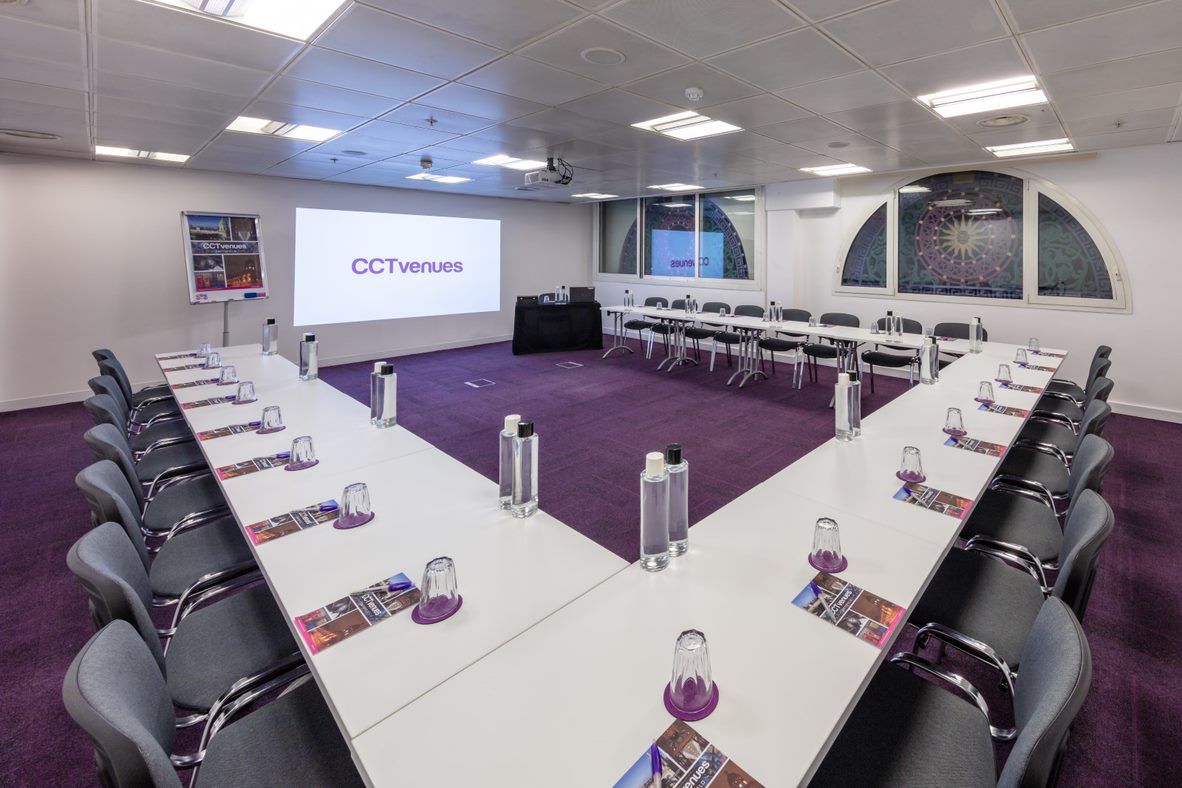
A small room does not need to be boring
Smaller meeting rooms can still feel polished and professional.
Look for spaces with:
- Modern, tidy interiors – smart without being overdone.
- Good lighting – flattering for people and presentations alike.
- Smart presentation areas – helping speakers feel prepared.
- Thoughtful design touches – plants, artwork or quality finishes.
- Sustainable practices – such as refill stations or energy-efficient lighting.
You do not need chandeliers and marble columns to make a good impression. Clients and guests often remember how a space felt more than how expensive it looked.
Preparation tips for a smoother meeting
Choosing the room is only half the job. A little preparation can make the day run far more smoothly.
- Set a clear agenda – Know the purpose of the conference and what success looks like. This helps ensure the layout and facilities match your goals. Share timings in advance where possible so attendees arrive prepared and discussions stay focused.
- Schedule wisely – If the budget is tight, ask about off-peak pricing. Also factor in travel times so guests are not arriving flustered. Mid-morning starts can often work better than very early ones, especially for attendees travelling across a city.
- Follow up afterwards – Send a recap, notes or next steps after the meeting to keep momentum going. A productive meeting can lose value quickly if actions disappear into the ether afterwards.
Read more in our how to plan a conference step-by-step guide.
Final thoughts
Small conference room hire can be a smart choice for events that value focus, flexibility and good use of budget. The best room is not always the biggest one, but the one that suits your delegates, agenda and objectives. A well-chosen smaller space can help your conference feel professional, productive and easy to manage from start to finish.
Looking for small conference room hire in London?
CCT Venues offers flexible meeting spaces, modern technology and central locations designed to make planning simple.
Get in touch